
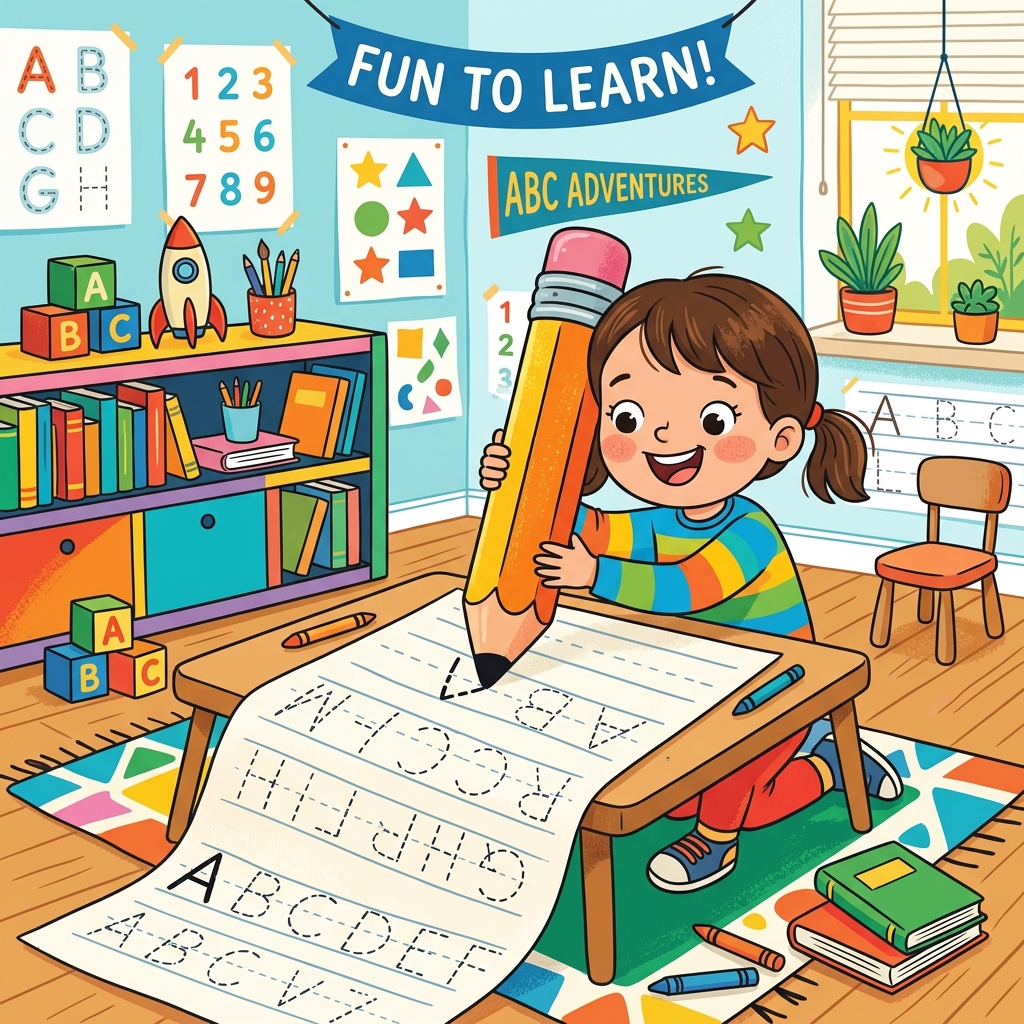
Why Tracing is Crucial for Early Childhood Development
When you hand a child a pencil and a dotted line to follow, they are doing much more than just drawing. Tracing is a critical stepping stone in early childhood development, laying the groundwork for complex skills like handwriting and drawing.
Here is why tracing should be a regular part of your preschooler's routine:
1. Refines Fine Motor Skills
Tracing requires a child to hold a pencil correctly and control their hand movements to stay on the line. This repetitive motion strengthens the small muscles in their hands and fingers, which is crucial for tying shoes, buttoning shirts, and eventually writing fluidly.
2. Boosts Visual-Spatial Skills
To successfully trace a line or shape, a child must interpret what they see and coordinate their hand to recreate it. This hand-eye coordination is a vital cognitive skill that helps them understand shapes, letters, and numbers.
3. Prepares Kids for Handwriting
Before a child can write the letter 'A' independently, they need to understand the strokes required to build it. Tracing breaks down complex letters into manageable, guided steps.
How to Make Tracing Fun
Tracing doesn't have to be boring! Instead of generic worksheets, try personalizing the experience. Children are far more engaged when they see their own name. With SketchKiddo's Studio, you can instantly generate Name Tracing Sheets customized with your child's exact name and chosen font style.
You can also incorporate:
- Cursive Tracing for older children.
- Shape Tracing for toddlers.
- Sight Word Tracing to combine writing with reading practice.
Start building those fine motor skills today by creating a custom tracing sheet on SketchKiddo!